2022 Prize for Poetry Winners
We are pleased to announce that the 2022 Robinson Jeffers Tor House Prize for Poetry, an honorarium of $1,000, is awarded to:
John Blair
San Marcos, Texas
for his poem “The Box”
Honorable Mentions, each with an honorarium of $200,
are awarded to:
David Bailey
Inverness, California
for his poem “Wind Charts”
Carson Colenbaugh
Kennesaw, Georgia
for his poem “An Oyster Bank Outside Beaufort”
Winifred Hughes
Princeton, New Jersey
for her poem “Revenant”
L.J. Sysko
Wilmington, Delaware
for her poem “M.I.L.F.”
Final judge for the 2022 Prize was poet Forrest Gander.
2022 Prize for Poetry Award Winning Poem
THE BOX
She carried the box under her arm. It smelled lightly of perfume. She saw her own reflection in a big mirror and thought, ‘My God, am I standing here holding in my hands the only thing that is left of Hitler?’
Interview with Liubov Summ, Granddaughter of Yelena
Rzhevskaya, in The Times of Israel
Eight teeth all told broken from the skull but held together by a gold bridge married to the first left tooth with a window crown (also of gold).
To Yelena Rzhevskaya Russian and frightened and twenty-six they are still somehow
a mouth chattering in spastic rattles hot inside the box in the pocket of her woolen coat.
The driver is taking her to the surgery in the Reich Chancellery which squats abgefuckt and
sullen on far Wilhelmstrasse where the Fuehrer’s dentist had in piety practiced because
she is searching for some proof that the devil is really real and really dead.
The story she is telling herself is this: there is this thing that was a man and only a man
and it cannot gnaw and gnaw through wood and cloth and flesh to take in its rotten teeth the
candy-hard knot of self that is all she really owns.
But the box rattles gleefully in her pocket next to the place inside her chest where her
own true life still waits to live its smaller self in ever smaller ways for all the long that
she might live.
The box is an ark of cruel commandments shouting like a nail torn back to the quick.
The box is the dark wringing itself like a dishrag over a tub full of fingerbones sucked
clean and white.
The box is ash sifting like flour thin snow filled with falling.
The box is a voice like pressure from the bottom of something deep the blood-dark
Volga gripping its banks a mine in which hard men work in the hot hot dark and it is
saying listen listen listen.
The point of the world is to change it it says the point of the world is to make it obey.
In the box something is scratching is trying to find its way into her lungs like a kind
of drowning.
In the box something sits perfumed and golden in its coffin of teeth and without flesh
or light it speaks and its voice is Russian and imperious and twenty-six.
What it whispers is a lucid history.
What it whispers is what wants to come out always in this wretched life comes out
and Yelena Rzhevskaya Russian and obedient and twenty-six like the good soldier she is
believes it can see it in the imagined gleam of gold the manic missing eyes.
The box is a box and it holds the empty truth like any box a mouth filled with the
ravenous nothing that is always waiting to be heard.
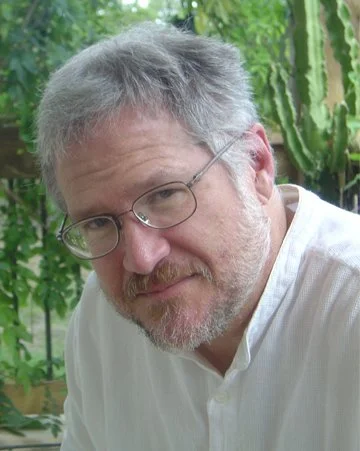
John Blair
John Blair has published six books, most recently Playful Song Called Beautiful (University of Iowa Press, 2016) as well as poems & stories in The Colorado Review, Poetry, The Sewanee Review, The Antioch Review, New Letters, and elsewhere. His seventh book, The Aphelion Elegies, is forthcoming this spring from Main Street Rag Press.
Honorable Mentions
WIND CHARTS
No book of becoming
you--just the way a tree
becomes by reaching
and balancing
in one wrong turn
after another.
No map to your depths
but the way a bud
discovers itself
by letting go of itself
continually--a journey
in itself.
No compass but the weathervane
in your chest, no friend
but the wind
to steady yourself by.
And it’s not an infallible
road, but the way the wind goes striding
off the cliffs of the known world, sailing over the edge
of the old maps--leaving the path’s
burnished stones behind, your cherished visions
of arrival falling apart like
worn-out boots.
Something beginningless
and wise, kinder than
your best intentions will carry you
over the million-faceted waves.
Photo by Nina Bris
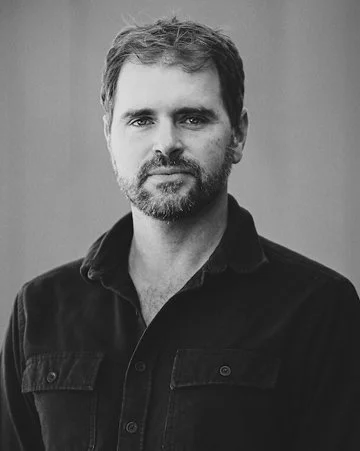
David Bailey, Photo by Nina Bris
David Bailey graduated from Principia College (Elsah, Illinois) with a degree in Creative Writing and Philosophy, and spent the next three years living abroad, mostly in India and Nepal. After traveling, he found a home in Inverness, California, where his first book, Journeywork, was published by Mount Vision Press (2016). In 2015, David was awarded a Fellowship at the Mesa Refuge, and in 2017 was a fellow at the Lucid Art Foundation’s residency program. He is also a founding editor of the Inverness Almanac, a journal based in Northern California. He is currently pursuing an MFA degree at San Francisco State University.
An Oyster Bank Outside Beaufort
I.
Skiffs putt from barnacled moors under mid-August sun, daylight
Or moonlight dragging ropes and blocks out to the pluff beds.
Old men with salt-stained baseball caps, running engines
And knees hard as they can until they break, slip into the slow
Marsh flow: clear sky, brackish flow dark against mead-light
Patches of cordgrass. Every bivalve in this oyster bed is farmed
By hand, cultured in aggregate, picked as a flower is picked.
Though the yields, one mud-dog says, are dwindling
And that’s not even considering the wild beds. Lab Coats report
Shells grow thinner by the year: carbon filtered through seawater
Makes the bite harder, acid noticeably stronger, and oyster shells,
Like so much of the world, it seems, are really just chalk.
II.
So it’s our memories which break us down. The myriad gasses
Stroking atmospheric balance into orgasm come from everything
We’ve left burning—coal veins, crude oil, torn couches, dolls,
Plastic cups—burned or dumped, volatilized into a thicker sky.
Let me repeat that nothing is lost. Each form is manifested
From a singular perfect code, from universal law. Look to these
Constants: things fall apart however drawn to one another, heat
Is the natural waste of organized systems, energy flux is required
To keep them going. Let me repeat that nothing is lost. The shells
Grow slower now, if at all. But what is an oyster? Spontaneous
Arrangement of the rest of the muck: cyanobacteria, comets,
Colossus of Rhodes, owls, salt, locust trees. Nothing is lost.
Religion, language, the shells of oysters. Things fall apart
And reach out for one another. There is a rhythm, like the tide,
Like a heart-beat: it is full of blood and it does not stop.
III.
Daylight or moonlight, skiffs chug across the sizzling channels
For oysters or crabs, or flatfish. They will not bleed when caught,
Although we do: bleed subtly alkaline wine from each delicate
Vein, though there is not enough to balance the world’s gradual
Dissolution. We all head home while things run the perfect cycle,
Crumble, and persist. I am thankful to have seen oysters, yaupon,
Saw palmetto, tarpon, cordgrass, egrets, but it does not matter
If they die, or if we do, and many a Beaufort oysterman
Does not even believe in warming, acidification, absolute death.

Carson Colenbaugh
Carson Colenbaugh is an undergraduate student studying forestry and horticulture at Clemson University, where he conducts research in environmental history and sets prescribed fires with the US Forest Service. His poetry appears or is forthcoming in Birmingham Poetry Review, Chautauqua, Poetry South, Delta Poetry Review, and elsewhere. His scholarly work in the field of ethnobotany can be found in Castanea. He will begin his MFA in poetry at Vanderbilt University in the fall.
REVENANT
I held back one key, which let me in
where I have no rights now but had
for so many years—let me in to that
particular past, not just the long ago,
though that too, but the rawly recent,
as close to now as your drawn breath,
the past we lived in in this house
only months ago, as we always had,
as though it would go on as it always
had, as though we could own it as we
owned these timbers and shingles,
these windows to look out on the bay
and the ocean, these doors to shut us in.
And now I have sold them, as though I
could sell the past, which is our only
place now, the only house that is not
just mine but ours, sold it as though
other people could own it—our house,
our past—as though they could simply
move in and move on, the house itself
mute and helpless, piled up with all
the incidentals of going out and going in—
beach equipment, cheery maritime prints
and hangings, braided rugs, wicker furniture,
now detritus I am sorting through for more
keys to what’s irrevocably locked, where
I can enter only obliquely, only alone. I walk
the rooms, still so familiar, yet so estranged.
I’m not supposed to be here, I’m as ghostly
as you are, but seeing and feeling, alive
in what’s invisible, what’s meaningless
to anyone else, now even to you. Can I
reach you here, you then but here,
if nowhere else—simply open a door
and walk into what’s gone? Out front
the buyers have heaped up what they don’t
want—chipped crockery, a glass tabletop,
heavy wooden wardrobe broken into rough
planks, the drawers handleless and gaping
that once held fragments of our daily living,
that we could pull open and find something
we were looking for, something we could grasp
and take for granted, now emptied out like
our time together as tenants of this house.

Winifred Hughes
Winifred Hughes is the author of Frost Flowers (2019), which won honorable mention in the Finishing Line Press chapbook contest, and Nine-Bend Bridge (2015), winner of the Red Berry Editions summer chapbook competition. Her poems have appeared in Poetry, Poetry Northwest, Atlanta Review, and International Poetry Review, among other journals. “Dyslexic” has been recorded for the Poetry Foundation’s permanent audio archive. “Kingfishers Catch Fire” won the 2014 Wild Leaf Press poetry award. She has been the recipient of two independent artist fellowships from the New Jersey State Council on the Arts.
M.I.L.F.
The M’s self-explanatory.
The I is a boy-man’s first-person pov—
a set of eyes evaluating
her body’s sensual potential
relative to his anticipated pleasure:
a furtive cost benefit analysis
taking into account hidden value against
asset depreciation.
L stands for like, but it’s the K in like
that I like for its indecorous clack
of tongue against soft palate
followed by a tiny capitulating exhale--
breath that subordinates itself
to the future’s pulsing throb,
a throb I can feel from here
as I stand at the gas pump
near a boy-man topping off
his already-full tank
with aggressive lever-pumps.
He’s like a nearly-satiated baby
nodding off to sleep
but awakening with a start
once the nipple pops free of his lips.
He’s got a clamping latch
and loud, complaining colic.
That cry’s going to shatter your nerves the nurse said to me postpartum,
and my firstborn— my daughter— did,
but I got my nerves back.
Or, we grew them anew
together.
My favorite nerve’s still the one
connecting my nipple to
my contracting womb.
I’d never have known
how animal and wild I am
but for that burning flare,
casting light enough
by which to survey the ground
of my body’s farthest biomes.
Boy-man at the gas station
doesn’t know nipples, or nerves, or
wombs from Adam, but
judging from his handling of this moment,
he knows what the F signifies.
His thoughts’ transit
from M to F
seems quick,
prematurely coming
without verification
of my M status
or the length, depth, or
breadth of his own L.
What I think
he knows best is
I.
He’s an I expert,
giving tours of local,
erect monuments to: being.
And his being wants me to know
he sees me: being.
I to I.
And for that, I thank him.
His is an affirmation
of a kind, here at Pump #3.
Even as his gaze travels
across my body, he’s tearing the receipt
hard and fast away from the pump,
crumpling it in a clenched fist as
his eyes move like the jet stream that
rakes then dips
across America’s
breadbasket, dropping heat
and moisture down and down,
before rising up and
peeling out
to sea.
In a Ford F 150.
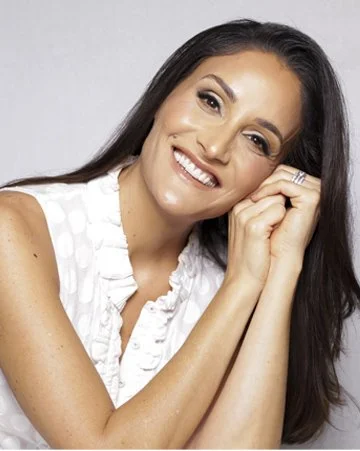
L.J. Sysko
L.J. Sysko is the author of BATTLEDORE (Finishing Line Press, 2017), a chapbook of poems about postpartum depression and early motherhood. Her work has appeared or is forthcoming in Ploughshares, The Missouri Review's "Poem a Week," BEST NEW POETS, Mississippi Review, and Degenerate Art, among others. Honors include Virginia Center for the Creative Arts and Delaware Division of the Arts Fellowships as well as finalist recognition from Copper Nickel's Jake Adam York Prize, Mississippi Review Prize, Marsh Hawk Press, and The Missouri Review's Jeffrey E. Smith Editors' Prize, among others. You can learn more at ljsysko.com.