2023 Prize for Poetry Winners
We are pleased to announce that the 2023 Robinson Jeffers Tor House Prize for Poetry, with an honorarium of $1,000, is awarded to:
Daniel Williams
Wawona, California
for his poem
“Songs of the Sangre de Cristos”
2023 Honorable Mentions EACH WITH AN HONORARIUM OF $200,
ARE AWARDED TO:
Dan Grote
Waymart, Pennsylvania
for his poem “Castaway”
Michele Herman
New York, New York
for her poem “Frying Marbles with My Father”
Ari Mokdad
Traverse City, Michigan
for her poem “Kharma”
Valerie Nieman
Reidsville, North Carolina
for her poem “So What?”
FINAL JUDGE FOR THE 2023 PRIZE WAS JUAN FELIPE HERRERA.
THE 2023 AWARD-WINNING POEM
SONGS OF THE SANGRE DE CRISTOS
Canto I
Dance of the Corn Maidens
Footdrum and windflute know more about flowers
than highway knows about contours of
A land when land was soft belly and living tissue
of races of people who breathed the
Earth with their lungs who saw with lightning
who heard with thunder whose lives
Were earthlike earthbound whose abundance
sprung from the land beneath their feet
Even as they walked in a day’s time and a day’s
time was enough of a walk to see foxes
Of winter snakes of summer fawns of spring
bears of autumn and everyone spoke in
One tongue the tongue of the earth and it was
enough to speak once then dream mostly
Like coals on hillsides after fires a fine powdery
warmth crackling and popping gone
For a while everything happening underneath
that should happen without thought
Or words but hidden and out of sight like these
corn maidens who dance first in silence
Then a soft strumming of strings and finally to the
raucous blossoming of their own spirits as
Though some being incensed of sage stepped down
from a skeletal stallion to water their hearts
All our tendrils were connected then a people
Their animal gods their place all in one and everything
related to chaparral and the stars the earth
Cleansing itself of every waste with renewal soothing its
people so their circle dance would spin smoothly
On its diurnal course describing flowers of sunlight
marigolds as round blossoms of star fire
When a child died it toddled back to its great parent
an adult’s death meant there was a folding back
Into the great womb like the folds of a wild lily
an incense of sage scorching coals of chamisa
The dead were given gifts even as they had gifted this
world with the vitality of their lives
Then the long sweet song of their absence settled over
everything with pale petals of ash
Canto II
Purple Iris
for Georgia O’Keeffe
These stony cliff faces of her paintings sit flat and huge
roseate gray and yellow under an
Acetylene sun scoring its sacred path across blue
invisible half-spheres tracking
Across the far horizon beyond crystalline shoulders
of La Joya Del Pedregal her holy place
Smoking chipotles roast on coals at day’s end
in blue canyons of crows crying
Thin fillets of elk on green willow sticks
drip fat on coals near walls eloquent
With shadow stories tracking against darkness
all of it the conduit for her praise of
Del Pedregal her mountain she believed if she
could only paint it enough times
Merciful gods would allow her to possess it
belonging to her alone in spirit even as
She owns this trail earth all around littered with
her vibrant details everywhere the notes and
Staff for the life-songs that were her art talus at
bases of cliffs Horus-like abutments
Table mesas chopped and broken arroyos tiny
nameless blooms countless brilliancies
As common as the purple iris never explored until
she painted her way inward with vivid colors
Delicate brush strokes whispering clitoral dreams
No possibility overlooked not gray-furred coyote scat
not ancestral stone gods or back further yet
Deeper into canyons where she painted with no power
no light but that which she generated alone
Under dark stars as a tiny meteor scratches its way
through obsidian night all but lost
Except for its perihelion glory as surprising as a turn
around on her trail to find in amazement
Two ravens floating the lively black one above in a
painfully blue sky the shadow one below as a
Dark crucifix flowing like water over these hot ochre
faces time has affixed upon Georgia’s ravines
Canto III
Wild Grape
for D.H. Lawrence
Here sounds an empty cantilena whose wind-voice
leaves no sounds of its singing but for
Golden leaves of cottonwoods over water that
click and flash with fresh earthen songs
Often have I arisen from such desultory musings
in a wood heated room behind adobe walls
Clackity-clack of an old manual Underwood
come to rest have peered out
Twelve-light windows at a meadow full of summer
as if these log and chinking walls had pushed
Their way full of earth like toadstools fisting up
into sunlight after rain and then have I said
Hola to my angelic Ponderosa with its wildly
arcing branches and boughs a maenad’s
Fingertips and arms have said buenos dias to my Frieda
bowing in oak shadow near the horses to gather
Acorns and mast and often have I stood on this porch
framed with rusted leaves of wild grape
Gazing with awe past green meadow flames to the crest
of Mt. Wheeler’s great stone god he who never
Moves or speaks but is content to stand and watch
Pedro up from San Cristobal to chop wood
While Manuelita his wife slaps masa between
avid bronze palms then toasts it
On a flat stone florid with the fire of chamisa coals
Four geese from the yard call out that time is a river
carving its way into the Parajito
And so good-byes forgotten and without words
I return to my floorless room behind
Echoing walls where a tendril moves ever deeper
to penetrate a webbed dark humus of love
Then sings a cantilena of cellos and pure soprano voice
a melodic glow from somewhere just within
Hearing in counterpoint to a mauve Villa-Lobos dusk

Daniel Williams
Daniel Williams, a poet of the Yosemite region of Northern California, has published his work in many journals and anthologies. He has a master’s degree in English Literature from San Jose State University where he studied poetry under the teaching of Nils Petersen and has taught composition and literature as an adjunct instructor at Metro State in Denver and at Columbia Community College and San Joaquin Delta College in California. As a member of Poets & Writers and PoetsWest in Seattle, The California Federation of Chaparral Poets as well as The Ina Coolbrith Circle in the Bay Area, he has published his poems and read them on radio and in Zoom Meetings for many years His work has taken prizes in ICC annual poetry contests.
He is the author of three chapbooks: Prince Hamlet National Park from Cyberwit.net in India; Lost Language of Mars and Angelis Salmonis and a Haunted Coastline from Moonstone Press in Philadelphia Mr. Williams has been nominated for a Pushcart Prize in Poetry by College of the Redwoods in Arcata, California
Honorable Mentions
CASTAWAY
Turns out this whole “free will”
thing isn’t all it’s cracked up
to be - trapped on an island
born of my bad decisions and
Poor choices, left alone to fire
off poems from behind this
penitentiary wall, stanzas
flying like sparrows out over
The razor wire, an encyclopedia
of failures, messages left un-
answered at the bottom of a
bottle that’s been cast out
Into an ocean in which I am no
longer welcome, and I’m not
looking for anything like a
rescue, I’ve simply given up
On that, but I still feel like
screaming out into The Nothing,
making noise is just a desperate
attempt at proof of life, the
Sincerest pleas of a nobody locked
inside of himself who just
wants somebody, anybody, to
know that he’s still here.

Dan Grote
Dan Grote is an incarcerated writer whose work has appeared in a wide variety of print and online publications. He is the author of several hold-up notes, a couple of signed confessions, one book of poetry, We Are All Doing Time (Iniquity Press/Vendetta Books, 2023), and one chapbook of poetry, The Sum Total of My Mistakes (Between Shadows Press, 2022).
FRYING MARBLES WITH MY FATHER
Five-thirty every weekday
he came back to us, smells
of town and antiseptic
fresh upon his coat.
He came with Polish jokes.
He came with crocheted
scarves and horseradish
root, which was how
his poorest patients paid.
He came with jars
of sour dills. He came
with bubble wrap,
a pogo stick, a Hermes
portable, our wingèd
messenger
in elevator shoes.
I learned to read
his footfalls in the hall.
One day each year
there came no slam
of leather bag
on foyer floor,
which meant a tetanus
shot, a booster dose,
a DPT. I feared
my father’s sting.
He daubed the alcohol,
he slid the needle
deep, he slowly pressed
the plunger down,
then slipped the needle out
and smoothed
the Band-Aid on.
His hands were like
the ones that hold
this pen – blunt, precise,
with well-clipped nails.
A tender father, too,
who climbed the stairs
at night and stood above
my bed and ran a hand
across my cheek and
never spoke a word.
Did he know I was awake?
Of course; there was
nothing that he didn’t know:
Latin roots, the recipe for mayonnaise,
how to represent
himself in court without
a law degree, how to whistle
through his teeth.
He taught me how to fry
a marble and now I need
to bring him back because
I’ve forgotten whether to fry
it wet or dry, whether to bring
a friend along on Sunday afternoon
or keep him to myself.
Let me bring him up
the cellar stairs where he spent
his evenings welding steel,
into the female world.
Let me bring him up
still young, with that eagle eye
that stared
at every object until
he figured out how it
was engineered, let me
bring him up in navy
work clothes, not a suit
that chafed around the swelling
lymph nodes in his neck,
and let him show me how
to fry the marbles
just enough
for them to crack
a thousand crazy ways
but never
fall apart.
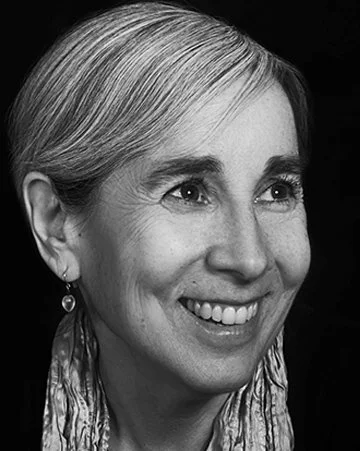
Michell Herman
Michele Herman is the author of the novel Save the Village (Regal House, 2022), which was a finalist for the 2023 Eric Hoffer Prize, and two chapbooks from Finishing Line Press: Just Another Jack: The Private Lives of Nursery Rhymes (2022) and Victory Boulevard (2018). Her poems and essays have appeared in recent issues of The Sun, Ploughshares, The Hudson Review, Carve and other journals. She spends much of the rest of her time helping other writers write better, as a longtime teacher at The Writers Studio and as a writing coach and developmental editor. She often performs her own prose and verse in the New York cabaret world, sometimes pairing up with her singing husband.
KHARMA
We barely made it; I couldn’t carry the olives’
heavy green-stretched skins in couplets of diaspora
Lebanon was invaded, the land was burned,
the smell of burnt olives turned into diaspora
I’m addressing the loss of an entire culture
never examined in couplets of diaspora
fighting against lost time, no language,
survivor’s guilt in this couplet of diaspora
We carried زيت and زيتون, hope,
our family’s aid during couplets of diaspora
smuggled through borders, Lebanon to Syria, Jordan,
the way everything burns in couplets of diaspora
There are more Lebanese living outside
of Lebanon from couplets of diaspora
I wondered about the persimmons, the red-orange flesh,
juicy stains of sugar in couplets of diaspora
Would the persimmon trees still grow
if we could not pluck them in years of diaspora?
The Bekaa Valley full of kharma, the fruit of the gods,
I bet you never learned that during couplets of diaspora
When we eat the persimmons now, they are soft and jelly-like
shipped across the ocean of diaspora
we never taste the tannin-rich immature fruit with firm skins
and just like the olives, disappear into couplets of diaspora
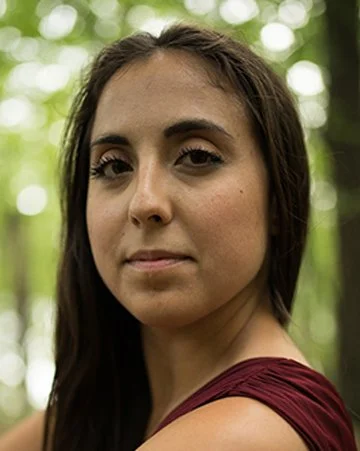
Ari L Mokdad
SO WHAT?
I use my grandmother’s quilts
to warm my bed. When we make love
I hear her fine stitches popping,
one two three along fault-lines
of fragments cut from old clothes—
“use it up, wear it out,
make it do, or do without.”
I’m done with doing without.
Every time I cut meat,
the knife mars the old plates.
Fragile glassware dulls each time
it’s washed. So be it.
I’m saving nothing. Goodbye
to dishes and coats and quilts
reserved “for good”—
the sexy dress Mother kept
in the closet til it no longer fit.
This body is aging—so what?
I don’t need reminders
of the ticking heart, the popping hips.
If famine’s predicted tomorrow,
there’s still a lot in the larder
and I’m having it. Strike a match.
We’re cooking it all.
Each morning I stretch
and crack joints, make room
for whatever light arrives—
the kiss, the embrace,
the invitation to slip into love
like a well-made suit that lasts and lasts,
becomes unfashionable
and then en vogue again.
Wear it out? I grab it
by the soft lapels
and press my face into its bounty.
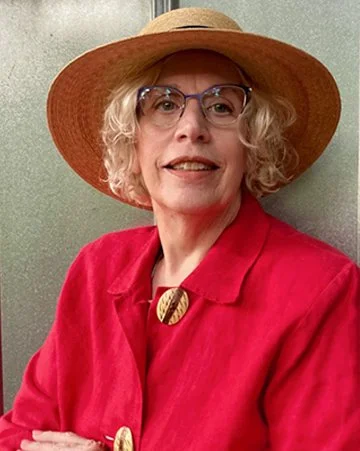
Valerie Nieman
Valerie Nieman has published three poetry collections, most recently, Leopard Lady: A Life in Verse. Her poems have been chosen for anthologies including You Are the River, Ghost Fishing: An Eco-Justice Poetry Anthology, and Eyes Glowing at the Edge of the Woods. Her Southern gothic suspense novel In the Lonely Backwater received the 2022 Sir Walter Raleigh Award for the best fiction by a North Carolina writer. To the Bones, a genre-bending folk horror/thriller about coal country, was a finalist for the 2020 Manly Wade Wellman Award. She is the author of three other novels and a short fiction collection. She has held state and NEA creative writing fellowships. Nieman has degrees from West Virginia University and Queens University of Charlotte and was a reporter and farmer in West Virginia before moving to North Carolina, where she was an editor and a creative writing professor at NC A&T State University.