2021 Robinson Jeffers Tor House Prize for Poetry
WE ARE PLEASED TO ANNOUNCE THAT THE 2021 ROBINSON JEFFERS TOR HOUSE PRIZE FOR POETRY, AN HONORARIUM OF $1,000, IS AWARDED TO:
TOM GOFF
Carmichael, California
for his poem “Blind Tom’s” Battle of Manassas
HONORABLE MENTIONS, EACH WITH AN HONORARIUM OF $200, ARE AWARDED TO:
DANNYE ROMINE POWELL
Charlotte, North Carolina
for her poem “November”
LARRY RUTH
Berkeley, California
for his poem “Leaving Manzanar”
PAMELA WAX
North Adams, Massachusetts
for her poem “Walking the Labyrinth”
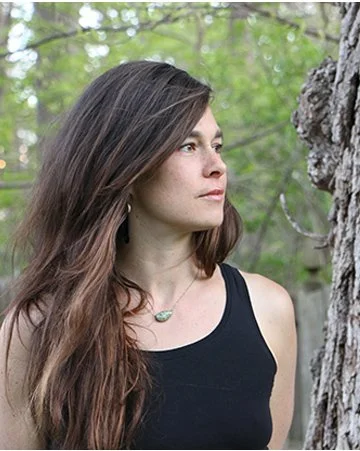
NICOLE WINDHAUSEN
Fayetteville, New York
for her poem “Ocotillo Dreams”
FINAL JUDGE FOR THE 2021 PRIZE WAS POET KIM STAFFORD.
2021 PRIZE FOR POETRY AWARD WINNING POEM
“BLIND TOM’S” BATTLE OF MANASSAS
(COMPOSED BY PIANIST THOMAS WIGGINS IN 1863)
I.
This cataclysm on piano keys
Begins with bass clef cadences on “drum,”
Snatches of “The Girl I Left Behind Me,”
In piccolo octaves, à la Doodle, Yankee…
Yes, here comes “Yankee Doodle,” prancing frieze-
Flat in elongated fife-line, tootling glum;
The drum tattoos turn distant blast; on come
Naïve cadets who still believe one breeze
Of musket breath will shear those shako plumes
Aimed like cocked snooks at gallant batteries.
We’ve heard from Yankees; here come Dixie’s kids,
Arrogant as are all raw but colorful
Parade-ground victors; open eye-wide lids.
Pamplona-like, this first Run of the Bull
Will soon begin; first hear an elegy,
A stripped-down nocturne for the stripping-down;
Seems placed right about where the canopy
Of smoke is to becloud noon mock dusk, false dawn.
Next, fresh enigma: why the Marseillaise?
A cavalryman’s conceit, supposed quite suave,
Meet for sword-slashing, lathered-horse forays?
Or is this the knell for uniform-frogged Zouaves?
Abrupt as the jerky start that snaps from sleep,
The nearer, nearer cannon-blast tone clusters,
Exploding song as torn young corpses heap,
From Earth by cannonball and canister
Discharged: as much from illusion as from life,
Storm routing the drummer, scattering all fifes.
Now, the shredded flag; Star-Spangled Banner,
Holed everywhere the cluster-blast scores hits;
Each levels the railroad magnate with the tanner,
Smithereens boys into smaller bits
As the mock-thunder-intervals come shorter,
Thinning the ranks that run to red disorder.
If only in one Battle-Piece Herman Melville
Had fitly depicted Blind Tom Wiggins’ work,
Spanning Wilderness, Gettysburg, Malvern Hill,
Chancellorsville, synods of the devil’s kirk,
Blasts back to front and front to back across
Four years of cenotaphs, long architraves
On colonnades (each column tallies one loss),
Greek Revivals built on the frames of slaves
Such as Tom Wiggins whose whole enterprise
Was crafting chords from ambient dissonance,
—Discords to subtly underscore the lies
Of Lees and Stonewalls, even perhaps of Grants?
From camp Tom leads; we wade the fever swamp,
Cross flaming rivers: Tom’s our psychopomp.
What white man’s riddled ghost can have suggested
To this disabled man far from the fight
How leaden musket balls can be ingested
By slaver and liberator wrong or right?
What psychic tremors vibrant in Tom’s mind
Evoke men fractioned by remorseless math?
How, decades before Charles Ives could dream or find
Such clangors, was Tom born a telepath?
Prestissimo octaves, Lisztomania clatter;
Contending hands delve opposite keyboard ends,
Pound into goulash all remaining coherence,
Objective correlative of the battle-shatter.
At last, all tunes accelerate, ribald, antic,
As terror whips the horse with empty saddle,
Supplanting the bravado with the frantic,
The anguished cowardice, the Big Skedaddle.
And last of all, bone-rattling, one more blast
Disperses as it affixes us in the Past.
II.
Great Wiggins’ ghost! Slave, yet master of your medium,
Your sleepless keyboard-carillons toll your fate,
Your genius robbed of life’s relieving tedium,
Each closed eyelid’s an impassable postern gate
Shut, even as perked ears cup: the clashing teeth
Of unoiled gears; the squawks crows make when pressed
Instinctively to speak; wind-shear across heath
That snaps trees—snap’s a noise!—or flays the hill’s crest.
It’s clear the daguerreotype’s ungainly plate
Will catch none of the ecstatic blush on dark cheeks
When, clicking into the mosaic template,
Locks that last sonic chip your earsight seeks.
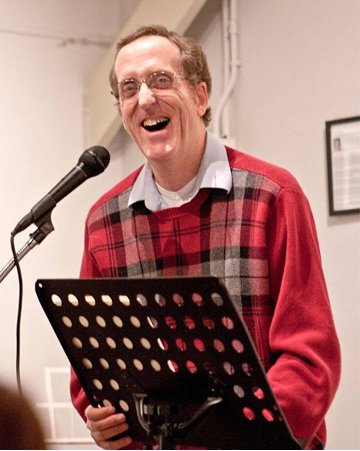
Tom Goff
Tom Goff is an instructional assistant in the Reading and Writing Center at Folsom Lake College. He has degrees in music performance from Sacramento State University and the San Francisco Conservatory of Music. He has written five previous chapbooks of poetry and a full-length collection, Twelve-Tone Row: Music in Words (I Street Press, 2018). He has lately had a poem published in Spectral Realms #14 (Hippocampus Press, 2021), and is represented in Fire and Rain: Ecopoetry of California (Scarlet Tanager Press, 2018; one of his two poems included is on Robinson Jeffers).
HONORABLE MENTIONS
NOVEMBER
The boy—your boy—almost eight,
cross-legged in the wing back chair,
head dropping into his hands.
Out the window,
a sky so vivid it might crack
like a plate or a face
or the naked truth.
You looked at him
and wanted to erase
what you’d said and promise
to stay. You didn’t. You escaped,
though for years, you’ve re-lived that day,
especially in November.
That sky. That chair. The air
bright, brisk. Those ginko leaves
flown overnight — every limb exposed.
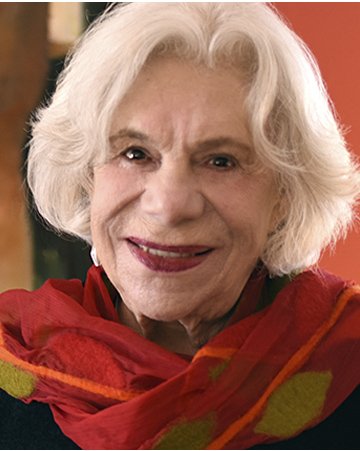
Dannye Romine Powell
Dannye Romine Powell's fifth collection of poetry, In the Sunroom with Raymond Carver, came out in 2020. She's won grants from the NEA, the NC Arts Council and Yaddo. For many years, she served as book review editor of The Charlotte (N.C.) Observer. Her book of interviews with Southern writers, Parting the Curtains, now out of print, includes conversations about craft with Walker Percy, Shelby Foote, Eudora Welty, Pat Conroy and others.
LEAVING MANZANAR
Jan. 4, 2020 AP — “A skeleton found by hikers
last fall near California’s second-highest peak was
identified as a Japanese American artist who had
left the Manzanar internment camp to paint in the
mountains in the waning days of World War II.”
I
Twenty miles by trail, then south and east,
leaving Symmes Creek, he hiked here,
talus and tarn, climbed scree and snow
seven thousand feet to a deep bowl,
three lakes over a high saddle, taking colors
of sky, cobalt, ultramarine, cerulean,
he’d hiked with younger men, all of them
from the camp, Manzanar, free to leave, no
place to return now, nowhere called home,
so they ascended, first Shepherd Pass, then
a boulder bridge to a ledge above, the basin
too high for fish, yet there were fish,
Colorado River Cutthroat trout, exotics,
transplanted from the Rocky Mountains.
II
Transplanted from the Rocky Mountains,
the fish arrived in Nineteen Thirty One,
concern over Colorado trout led to a plan,
mules to pack them in, high up and away
to lakes in Williamson Bowl, waterfalls
and rock on the creek below, once there,
the fish were safe, and trapped, no escape,
kept Colorado Cutthroats out of trouble,
forty-odd years later, worried over survival
of Cutthroats in Colorado, fisheries folk
learned of their Sierra refuge, wondered
if some of those fish, returned as natives
could multiply, stave off danger, save
habitats, and help the Cutthroats survive.
III
Habitats and help, the Cutthroats survive,
the younger men carried fishing rods,
the older man, watercolors, pad, pencils,
looked for a place to paint, dark of granite slide,
solitude above streams fed by snowmelt
and ice from the mountain, a niche to wait,
caricature a single fish, body twisting,
as it rose out of blue water breaking
the surface, rubies on its throat and fins
showing against long dihedral faces
of Mount Versteeg, or the shadows
thrown by Trojan Peak, two long clouds
peer over the ridge, weather turning
in the high country at the end of July.
IV
In the high country at the end of July,
separated from the fishermen, the artist
on his own in the bowl, no warning,
watched the storm, lightning, thunder,
wind funneling rain, made it hard to see
the deluge in the canyon, the artist lost
the trail, no way back to his companions,
the fishermen too lost their way, sheltered
under overhangs in the mountain, rock
and roof enough, perhaps the older man,
they hoped, had scurried down the creek
to safety, yet he was not seen alive again.
In Twenty Nineteen, near summer’s end
two hikers found part of a man’s skeleton.
V
Two hikers found part of a man’s skeleton,
the body of the artist was buried long ago,
after the storm, a makeshift grave by a lake,
stones of gray granite marked his tomb.
A photograph of the burial site was taken
by the men who had gone up the mountain,
all that remained to give to the family,
the memory of the storm left in the basin.
Over time, the grave in that high bowl
was lost, until the mountain, its shift
and slide, exposed the bones, no one
knew at first, no one could remember
who the man might be, or exactly how
a man’s body came to rest in this place.
VI
A man’s body came to rest in this place,
forty years on, the Cutthroats journey
home, arrangements made to fit the fish,
logistics to reduce risk, shorten the hours
fish’d be out of water, transported, in tanks,
helicopter, until they made it to the Rockies
two hundred forty-six river trout, high
up Ptarmigan Creek, high up and home again.
Where the Cutthroats thrive, maybe a child
maybe Colorado, pastel, or chalk, her hand
traces the flash of fin, swerve of body, tail,
she pauses, rubies rise out the water.
What was found, what was rescued,
what was lost, what is saved.
VII
What was lost, what is saved,
a half-century ago, looking for the artist,
two of his sons climbed over twelve thousand feet,
then clambered down dark rock to the water.
Searching, one always thinks rescue,
hopes for the best, though one cannot
always save what is loved once it is lost.
What was found there somehow stayed lost.
What was lost, what they searched for,
what was found is memory,
not memory of losing the artist,
it is memory of a man, his family,
and those who walked mountains to find him,
twenty miles by trail, then south and east.
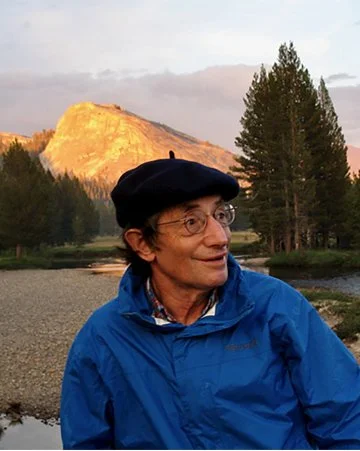
Larry Ruth
Larry Ruth is a consultant in environmental policy. He lives in Berkeley, and conducts research in forest and natural resources, wildland fire policy, and ecological sustainability. He enjoys the vestiges of the wild, far and near.
WALKING THE LABYRINTH
I am a connoisseur of labyrinths. I can tell
you about the ancient drawing with Jericho
at the center, suggesting that the walls
came a-tumbling down because of a
parade of seven circuits, a merry-go-round
of intention. What we do here stirs
heaven to act. Tiny finger
labyrinths were carved into walls outside
old country churches in Europe,
so supplicants might ground themselves
for the sacred within, a prayer before prayer.
I could explain how a maze
confounds, a labyrinth uncovers
the self, meditation in motion.It resembles
a womb, a brain, a fingerprint, the revolving
planets, the primal and timeless. I weave
and spiral like Ariadne across the length
of a football field contained within a 42-
or 20-foot or 5-inch round.
I might carry a question lightly in the back
of my throat or a prayer
tucked between my breasts.
I may be in a candle-lit rectory in the Bronx,
following a unicursal path branded
in black paint on a waxed parquet floor,
or inhaling an autumn Berkshire landscape
while weaving in lanes drawn
by shrubs, string, or stones.
I could be prancing barefoot on grass
or solemnly marching to the cadence
of a dirge-like owl demanding answers
to unknowable pain. Sometimes I create
a Cretan-shaped labyrinth on a blank
page starting at an intersection
of four straight corners, then fill
in seven concentric circuits, one arc
following another, rainbows radiating,
seeking the Eureka of wisdom
that King Solomon honed on his daily
constitutional through a whorling solar system
on his palace grounds, seven orbits
of stepping holy, holy, holy into the whole
world of God’s glory, while he composed
love songs and proverbs.
I am superstitious but not fussy
about my labyrinths if they get me
where I’m going, which is now here
and nowhere in time, mindful not to cross
boundaries, ethical or spatial, to finish
what I begin, and to remember that the one
way in is the only way out.
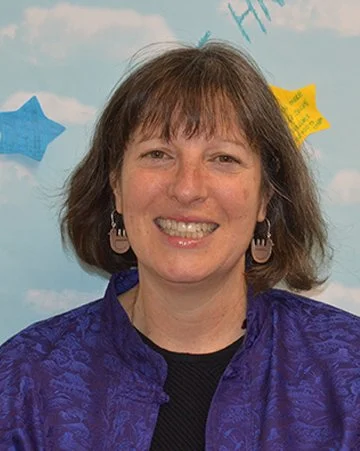
Pamela Wax
Pamela Wax is a poet-rabbi whose poems have been published or are forthcoming in journals such as Pensive Journal, Heron Tree, Green Ink Poetry, CCAR Journal, and Paterson Literary Review, and whose essays on Judaism and spirituality have appeared in many books and publications. Pam’s first book of poetry, Walking the Labyrinth, was a finalist for the Main Street Rag Poetry Contest and will be published in early 2022. Pam serves as the Spiritual Care Coordinator at a social service agency. She and her husband live in the northern Berkshires of Massachusetts and the Bronx, NY.
OCOTILLO DREAMS
I.
I wrote this poem in 1999,
ghosts of Dillard and Abbey looking
over my shoulder
all of us feverish with sun, crazily happy.
My high desert journal already jammed
with second thoughts,
sketches of road runners and stratified field notes,
I mouthed each word as it came
carried every newborn syllable, careful
not to look directly into the burning centers.
At dusk lines ran out
onto shadow filled mud flats
leading me to follow,
wildly sucking finally cool air
lungs aching in pursuit.
Under looming moon
we became one, bodiless
grey spirits clinging
to the backs of coyotes.
II.
We were geology students in the field,
each morning breaking camp
unshowered and freshly awed,
heaping banter with our cowboy coffee.
Packed into the van
weeks of gear sliding among dusty limbs,
we wove endless dirt roads;
hide and seek
with unmapped, wind carved formations.
Diligently deciphering rock layers,
we turned rifts between epochs
into thoughts on adulthood,
recorded our findings, blindly
missing the depth of sacred silence by mere inches.
If only we had chosen botany,
succulents named in Latin
slipping among shadowed images of our sleep
or ministry,
that we might have prayed
a divination upon such green spires
jauntily ascending.
We crammed promises
to always wander
into muddy frame packs already stuffed
with molding clothes, sleeping bags and perfect stones.
Boarded our flight home exhausted
clutching weeks with words,
moments blurring like the landscape
fading to a sea of brown below.
III.
Twenty years of wandering continents, while
Ocotillo still bloom red in earliest spring rains,
damp air suspending weighty tendrils.
Ancestry lines of cacti
weave like burrows under burning earth
crossing one another at random junctions
only to fan out like silt in a basin; alluvial scars
photographed as rare beauty.
Even now from east coast suburbs
waist deep in snow,
musky scent of creosote lingers.
Memories drift on a desert wind;
unbroken hiking boots dancing
across frozen Kaibab limestone,
body aching to dissolve
into infinite North Rim sky.
Evening traffic creeps
through slushy roads.
I am lost in imagining
quiet, joy walking
among nomadic sands
land of hide-and-seek,
of wild eyes, weathered rock.
Remembering ancient saguaro
each new arm a human lifetime,
ironwood and mesquite
tough skinned and pungent,
while predawn color bleeds
through night’s thin coat.
Nicole Marie Windhausen