2026 Prize for Poetry Winners
We are pleased to announce that the 2026 Robinson Jeffers Tor House Prize for Poetry, an honorarium of $1,000, is awarded to:
Stephen Ruffus
Salt Lake City, Utah
for his poem
“Setting the Stone”
Honorable Mentions, each with an honorarium of $200, are awarded to:
Justin Hunt
Santa Fe, New Mexico
for his poem
“When, for the Last Time, Mom, I Drove You”
Carol Milkuhn
Saratoga Springs, New York
for her poem
“A Second Chance”
Valerie Nieman
Reidsville, North Carolina
for her poem
“Family Album”
Susan Richardson
Boise, Idaho
for her poem
“My Basque Ancestors”
Final judge for the 2026 Prize was poet Andrew Schelling.
The annual Robinson Jeffers Tor House Prize for Poetry was established thirty years ago as a living memorial in honor of American poet Robinson Jeffers (1887-1962). The Prize is underwritten by the Varady Family Trust, Tor House Foundation Trustee Lacy Williams Buck and Honorary Foundation Board member Allen Mears. This year we received 807 poems from 40 states and two foreign countries.
2026 Award-Winning Poem
Setting the Stone
It is done. Plot 194.1, though we
will not need a map. All
set in place carved and painted
in black galaxy granite
shot through with subtle strands
of light across the night sky
like the Milky Way. A crescent moon.
A scattering of stars, and the one
arching toward the mountain peaks.
Also, Saturn, the last planet
we can see with the naked eye.
The yin yang we remembered
to add which he wore on a necklace
with a tie-dyed shirt as a boy.
In the center an oval shaped photo
where he is holding a pet rabbit.
And then the image of him
at the beginning of a long walk
far into the hills on his last hike.
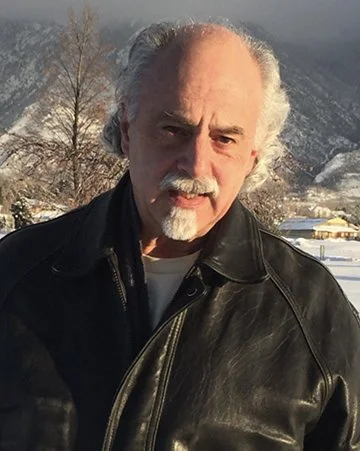
Stephen Ruffus
Stephen Ruffus, originally from Queens, New York, attended the University of Buffalo where he studied with poet Robert Creeley. After graduating he moved west to pursue graduate studies in Colorado, California and Utah. He settled in Utah where he spent most of his professional life as a teacher and administrator at Salt Lake Community College. His work has appeared in numerous journals, including Hotel Amerika, Radar Poetry, Third Wednesday, JMWW, Hanging Loose Magazine, I-70Review, New World Writing and SALT. He has been a finalist for the Louis Award sponsored by Concrete Wolf Press, a semifinalist for the Morgenthau Prize sponsored by Passenger Books, a Pushcart Nominee, and a recipient of the Salt Lake City Mayor's Artist Award. He was a founding poetry editor of Quarterly West and twice a recipient of a Utah Original Writing Competition Award. His poem, “Setting the Stone,” is one of a sequence of poems about the passing of his son. He lives in Salt Lake City with his wife.
Honorable Mentions
When, for the Last Time, Mom, I Drove You
off the home place, and we turned east and out
of town on the county blacktop, past the grain
elevator where I'd worked summers, its headhouse
snagging the day's slipping light, and we drew
near the graveyard in the northwest corner
of the quarter Dad had bought when he was young,
the place where he'd taught me to fish
Slate Creek's muddy holes, I asked if you wanted
to stop, and you said "Keep driving! I'm done here!"
your forehead wrinkling, lips lining flat,
though not all of you was shuttered to me, and you
relented a moment later, told me to go on in.
I nudged the car through the cemetery's iron gate,
followed the dirt road along the barbwire fence,
its ragged line of north-bent cedars and elms,
and came slowly, so very slowly to a stop
where our family had parked scores of times--
for Memorial Day and graveside services, headstone
weedings and the laying and picking up of flowers,
the visits each of us had quietly made alone.
I got out. You didn't budge, kept your seatbelt
cinched as the low-slung sun swept
the graveyard's grass and I stood for a minute
among our dead: Dad and his first wife Mildred,
sweet Great-Aunt Mary and Uncle Ora,
my grandparents Anna Belle and John, who
settled those plains in '93, and Dad's brother
and sisters, Uncle John, Aunt Helen
and Aunt Lois next to her bad-nickel husband,
and one row over, the Cranmers--
of course the Cranmers, who were like family.
As we pulled back to the highway, you said
"I never thought your dad was out here,"
and the truth is, Mom, I didn't either,
but my God, how could the dust of him not
be out there? In the raw of that place, its wind,
the wide flat earth? But I didn't say that aloud.
I said nothing as I turned south at the six-mile
corner and steered through Anson, the little town
fallen in, railroad tracks yanked up for scrap,
abandoned barns listing into dusk. And I kept
driving, driving us away, over Slate Creek's
eastward bend and up a rise, the sun now sunk,
a wind-sheared cottonwood knifing the horizon,
the sky cloudless, a choke of red over the west
we were leaving.
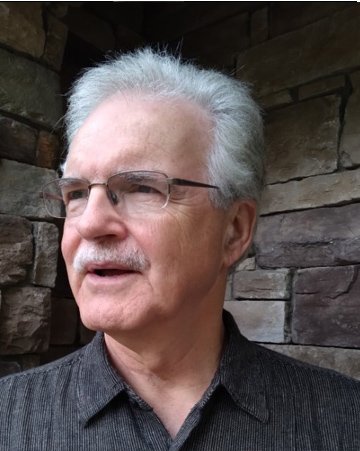
Justin Hunt
Justin Hunt grew up in rural Kansas. His poetry has won numerous awards and appeared in Five Points, Barrow Street, Southern Poetry Review, North American Review, New Ohio Review, Solstice, Bridport Prize Anthology, Aesthetica and Terrain.org, among others. His full-length collection, Requiem in Wide-Open Minor, is forthcoming from CavanKerry Press. For more information on Justin’s work, please go to justinhunt.online.
A Second Chance
To Sir John Everett Millais
--Ophelia, oil on canvas, 1854
You reclaimed Ophelia.
All those days you spent painting en plein air, bitten
by buzzing insects, clay sticking to your boots,
your paints blistering, drying in the Surrey sun,
all those days you spent realizing that fallen willow,
as well as that lushness of weeds and wildflowers--
all those days were well spent
for here is Ophelia,
hands raised, palms held open as she drifts in a stream,
unaware of danger because her wedding dress,
trapping air in billowing folds, gives her buoyancy
even as she sings, lips half open,
telling her story,
a story only heard second-hand in Hamlet
until you step in, giving her a death of her own,
not a death through the words of others--
for you have given her a few more minutes of life,
your brush stilling the river, keeping her afloat--
while her sweet song soothes,
softens the closeness of death.
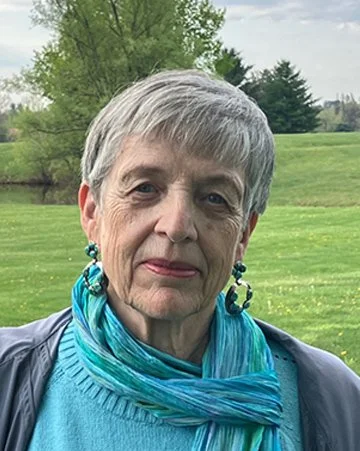
Carol Milkuhn
Carol Milkuhn, a former English teacher, has spent her retirement exploring her interest in poetry through both reading and writing. She is the author of two poetry chapbooks, In theCompany of Queens (Finishing Line Press, 2020) and Modern Tapestries, Medieval Looms (Orchard Street Press, 2022). In addition, she has been published online by Winning Writers and Literal Latte, as well as in several journals such as The Mountain Troubadour, Atlanta Review, The Copperfield Review, Vermont Literary Review, Dash, and Bloodroot Literary Magazine. She lives in Saratoga Springs, New York, with her mini-schnauzer, Atticus.
Family Album
Aunt Denora at night down on her knees
with a toothbrush scrubbing the corners
of the kitchen, keeping the linoleum
spotless, the counters polished to bone,
sheets bleached til the thread melted.
The forty acres out back kept coming inside:
cowshit that kids brought in on bare feet,
dirt on the carrots, the rust on the apple,
smut on the corn, the dust off the hay,
plowed fields bannering the wind.
She kept a set of ruby glass
locked in the china cabinet,
but when she took it out at Christmas
a film of filth had dulled the bowls
and settled on the hobnail pattern.
And all this time her husband
bringing home the mills, breathing
atoms of metal that layered his lungs
like threads of ore gleaming inside
the mountain, til the weight broke him.
Four sons thrived in the muck and dirt,
going off to the labors of the poor,
cutting and breaking and crushing
the world into salable shapes,
logs and rolled metal.
Oh, and there was a daughter, Anne,
inheritor of the toothbrush and the washrag,
scratch of nails against burnt-on dinner.
The doctors had no idea
why her heart came apart at the seams.
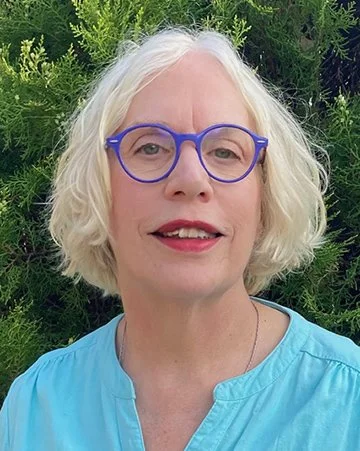
Valerie Nieman, Photo by Al Sirois
Valerie Nieman’s poetry and novels draw on her Appalachian heritage and deep familiarity with the natural world. Nieman is the author of three poetry collections, including Leopard Lady: A Life in Verse. She is the author of seven novels, most set in or connected to Appalachia, but most recently the historical novel Upon the Corner of the Moon. She also has a short fiction collection. A graduate of West Virginia University and Queens University of Charlotte, Nieman was a founding editor of Kestrel and Prime Number literary journals. She has held regional grants and a National Endowment for the Arts fellowship. Her writing has been supported by South Arts and NC Arts Council grants. She’s been a journalist, farmer, editor, sailor, and professor. Now retired, she gardens and fly fishes but is expert at neither. https://www.valnieman.com
My Basque Ancestors
buried their dead newborns in the eaves of their rooves
or in the garden--fertilizer bucking up the next child.
The family bakes, plays, dances around the hearth.
An abandoned house becomes an extinguished fire.
To summon the new, toss children's milk teeth into the flames.
Walk round the sacred places--church, cemetery, house--
at your peril. Katalin dared and disappeared: With the Night One.
If you want to hurt me, bend a coin and toss it into the fire.
I'll walk naked on earth before sunrise to ward off illness.
The most precious gift for the dead?
Light, a real treat in the world of the dark.
If you curse your enemy all day long,
he'll jump out a window!
The mother of a trapped miner lit a candle everyday but one.
That day, he sat hungry, in darkness.
As the days shorten, you can waken the sun
with cow bells, shouts, drawn-out cries--
The laminak build bridges at night. At midnight,
when the baker lights his oven, the confused cockerel crows,
urging the laminak to drop their stone and flee.
That's why the bridge always misses one stone!
When you come across a straw mattress burning in the road,
say a prayer for the dead, throw holy water onto the flames.
Toss a ladybird into the air to tell the weather.
Smugglers and customs guards make an agreement:
If they crossed paths, the Night Workers would drop their bundles
of coffee sugar chocolate wine tobacco candles cloth and run off.
The guards' attention would shift from shooting to looting.
As your candle burns down, he who stole from you will perish.
Susan Richardson
Susan Richardson is the author of the prize-winning chapbook Unmythical Women from Slapering Hol Press and of two books of poetry, Rapunzel's Short Hair and Braving the Flood,from Winterhawk Press. Her individual poems, stories and articles have appeared in various magazines, anthologies and books; some have received awards from these publications. For many years Susan edited and published anthologies--First Light, Ashes Caught on the Edge of Light: Ten Chapbooks, Zeus Seduces the Wicked Stepmother in the Saloon of the Gingerbread House--compiling the literature of contemporary poets, fiction writers and memoirists. Susan also works as a painter and jewelry maker. Some members of her mother's family, the Basque Resseguies, settled in the Coeur d'Alene, Idaho, area.